

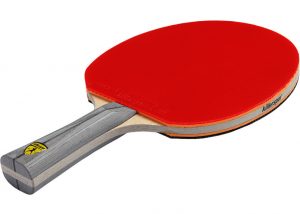
Ping pong paddles have two different colors traditionally red and black so opponents can visually identify which rubber side struck the ball during a rally. The International Table Tennis Federation (ITTF) made two contrasting colors mandatory in 1986 to stop players from sneakily flipping identical-looking rubbers with different spin characteristics mid-point.
If you've played ping pong before, you have probably wondered why the two sides of a ping pong paddle are different colors traditionally red and black. While it might seem like a cosmetic choice, there is actually a rich competitive history behind this rule. Let’s dive into these reasons in detail.
History of Ping Pong Paddle Color Differences
There is a specific reason why ping pong paddles feature two contrasting colors. This rule originated in the late 20th century as competitive table tennis became more technical. Players began using two specialized rubber sheets with drastically different playing characteristics such as a fast topspin rubber on one side and a spin-neutralizing "anti-spin" or "long-pips" rubber on the other.
When both rubber sheets were the exact same color, players would rapidly flip or "twiddle" the paddle in their hand during a point. Because both sides looked identical, opponents had no way of knowing which rubber struck the ball, resulting in unpredictable trajectories and unfair trickery. To prevent this deception and preserve fair play, the International Table Tennis Federation (ITTF) officially mandated two contrasting colors in 1986. Today, paddles are inspected before official matches to ensure they meet these equipment standards and keep the game fair.

Is There an Advantage to Using The Red or Black Side?
Having different rubbers on each side of a ping pong paddle gives players a strong tactical advantage. While the colors themselves do not grant special powers, players often attach two distinct types of rubber sheet to each side such as a fast topspin rubber on one side and a defensive or anti-spin rubber on the other. This allows players to flip or rotate the paddle to change ball speed and spin mid-rally. To maintain fair play, official table tennis rules state that players are allowed to inspect their opponent's paddle before a match begins to examine what types of rubber are being used.
Which Side Does What For a Ping Pong Paddle?
A common myth among casual players is that the red side is naturally faster while the black side creates more spin. In reality, manufacturers produce identical rubber models in both red and black. The color dye alone does not dictate performance; speed and spin are actually determined by sponge thickness, foam density, and surface tackiness.
When customizing a paddle, you can select different rubber sheets for each side to suit your playstyle such as a tacky, high-spin rubber for your forehand and a soft, high-control rubber for your backhand. As a helpful tip, always take advantage of the pre-match paddle inspection to see which rubber sheet your opponent has placed on each side so you can anticipate their spin and shot speeds during play.
Modern ITTF Rules: Can You Use Blue, Green, or Pink Paddles?
While red and black have been the standard since 1986, equipment rules expanded significantly in recent years. On October 1, 2021, the ITTF updated Rule 2.4.6 to give players more visual expression and modernization.
Under current regulations, one side of the paddle must still always be solid black, but the opposite side no longer has to be red. Players can now legally use any of the following approved colors for the second side:
- Bright Green
- Blue
- Pink
- Violet (Purple)
- Traditional Red
The only major rule is that the chosen color must clearly contrast with both the black rubber on the opposite side and the white or orange balls used in competition.
Frequently Asked Questions
Which side of a ping pong paddle is for forehand?
There is no official rule stating which color must face forehand or backhand. You decide which color aligns with your forehand based on the specific rubber model you choose to mount to that side of the blade.
Can you play with a paddle that has two black sides?
No. In official ITTF matches and club tournaments, using two rubbers of the same color is strictly illegal and results in disqualification. In casual backyard play, official rules are generally relaxed.
Is twiddling your paddle still legal today?
Yes, rotating or flipping the paddle in your hand during a rally remains completely legal. However, because both sides now feature contrasting colors, your opponent can clearly track when you switch sides and react accordingly.
Why are official ping pong balls only white or orange?
The ITTF mandates white or orange balls with a matte finish because these shades offer maximum visual contrast against dark green, blue, or grey competition tables and venue surroundings.
Key Takeaways
Understanding why ping pong paddle sides are different colors comes down to transparency and fair play. The two-color mandate was created to stop deceptive tactics like mid-rally paddle flipping without sacrificing technical rubber variety.
Whether you choose classic red and black or modern options like blue and green, your custom ping pong paddle's speed and spin depend entirely on rubber construction rather than surface color.